FOUNDATION METHODS
Helical Piles: Installation, Applications and Quality Controls
A practical guide to helical piles in Florida: how they work, installation stages, torque records, advantages, limitations and information needed for a quote.
What is a helical pile?
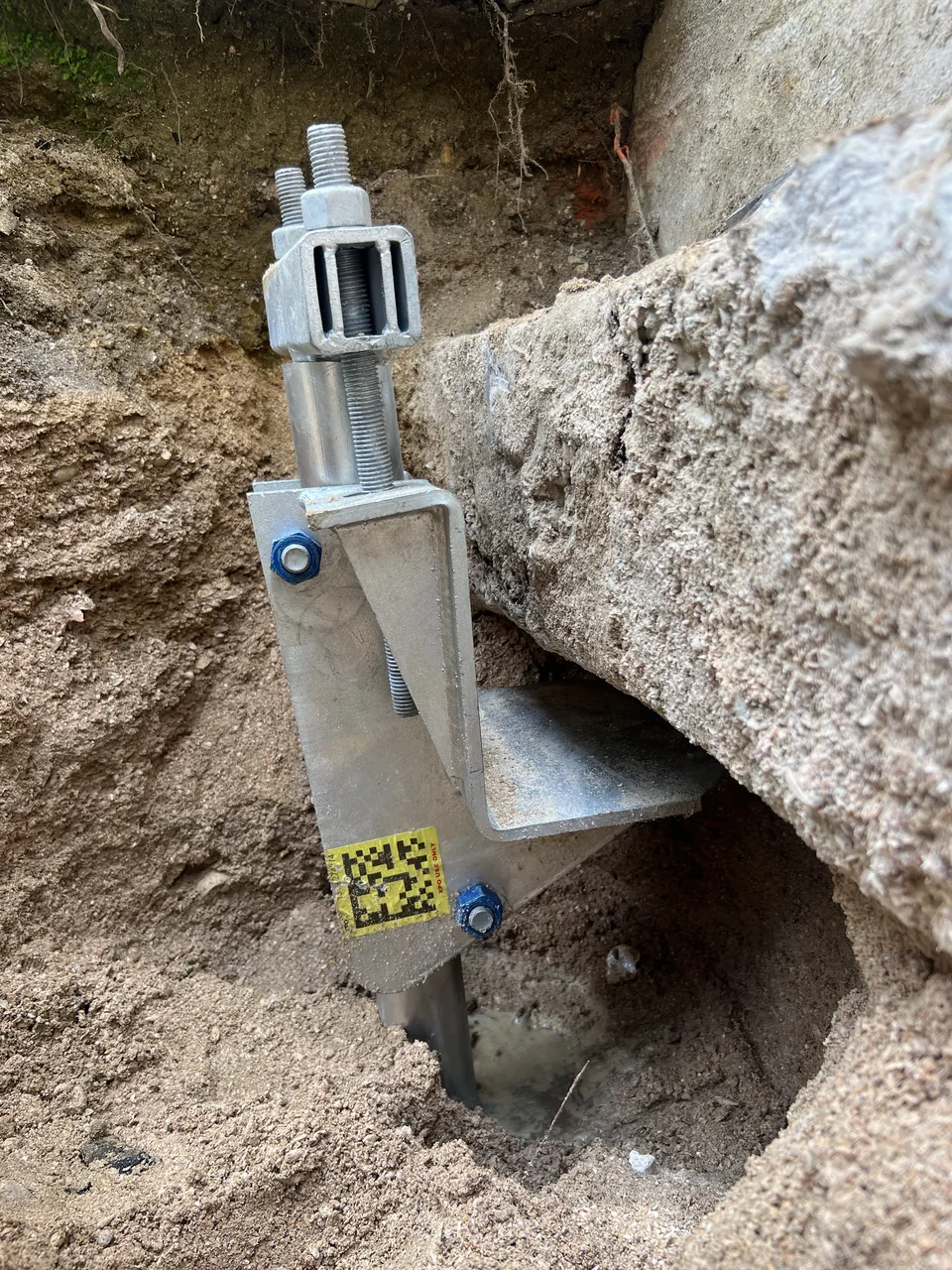
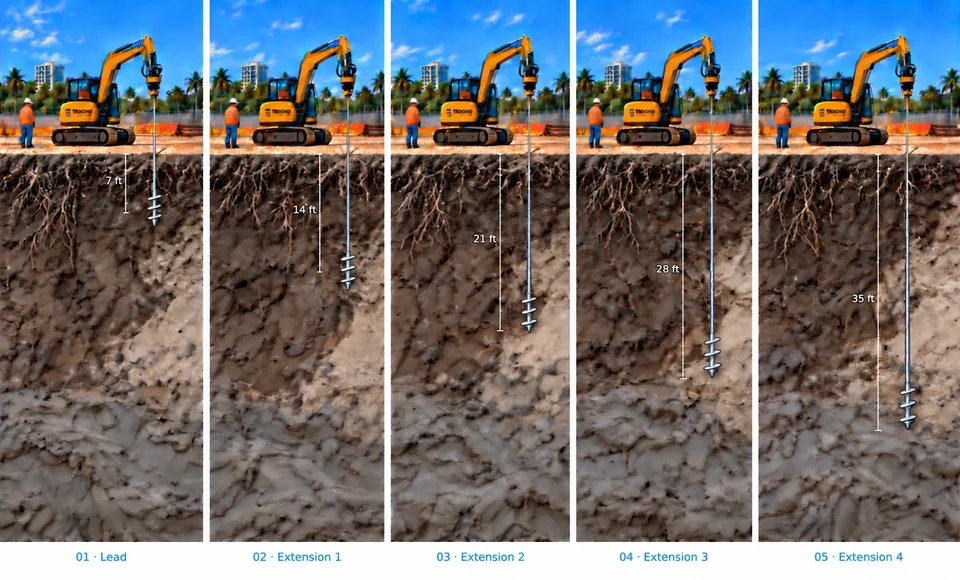
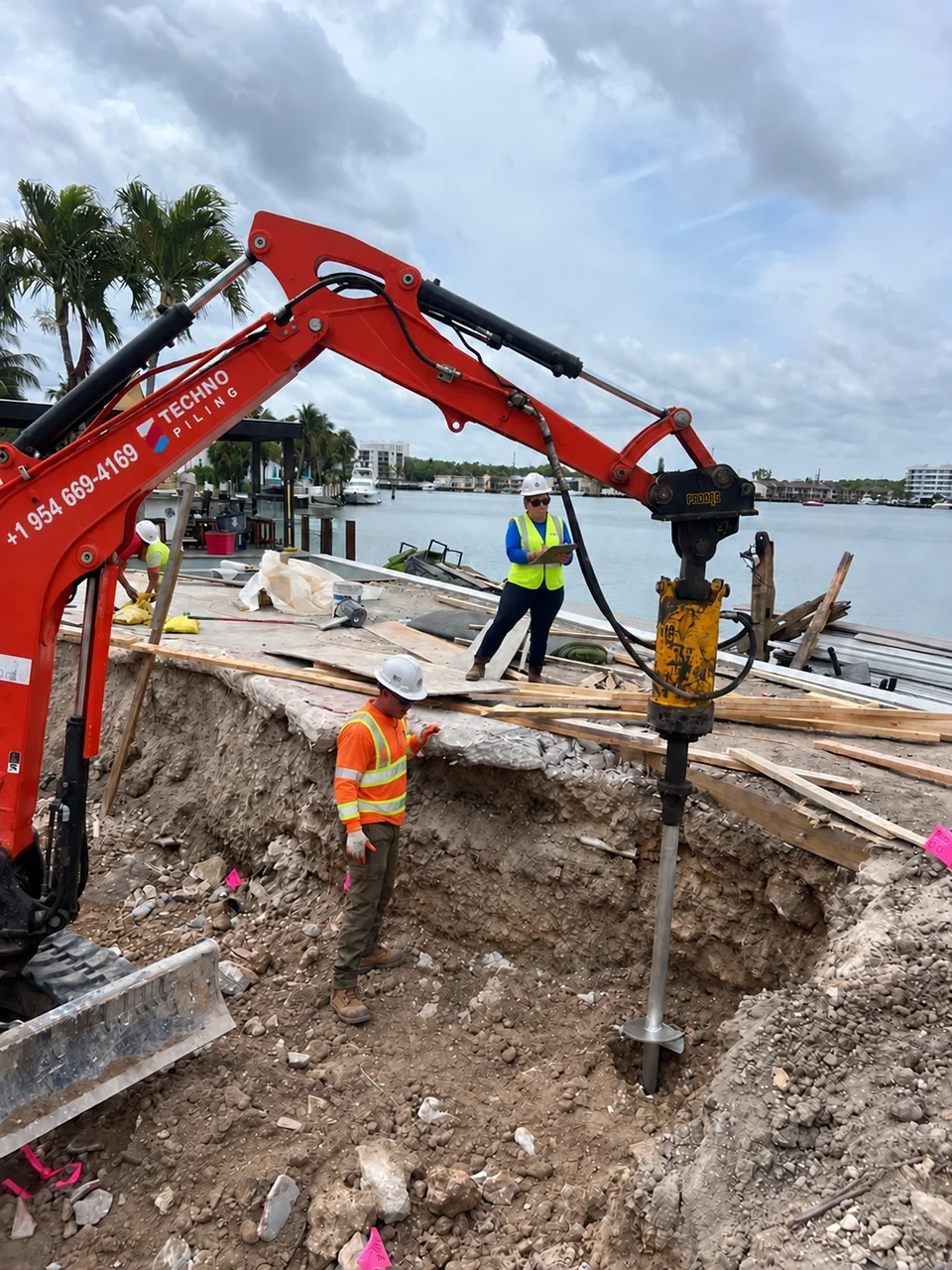
A helical pile is a steel foundation element with one or more helical bearing plates near its lower end. A hydraulic rotary drive advances the pile into the ground. Extensions are connected as installation proceeds, and the completed pile connects to the structure through the specified head, cap or bracket.
The purpose is to transfer the required loads into suitable ground. A pile can be designed for compression, tension or a combination of actions, but those resistances must be checked for the selected system and site. A helical shaft does not have one universal capacity.
Where the method can be useful
Typical applications include new foundations, additions and underpinning. Helical foundations may also be considered for pools, equipment supports and other structures where the design and ground conditions support their use. Compact installation equipment can be useful on restricted sites, although access must be measured rather than assumed.
For Florida projects, review the actual subsurface profile, groundwater, fill, buried obstructions and adjacent structures. Conditions can change within a site; a regional soil description cannot establish the pile configuration or installed depth.
What needs to be decided before installation
- Design loads, allowable movements and pile layout.
- Ground investigation and the intended bearing zone.
- Lead section, helices, shaft, extensions and compatible connections.
- Installation torque limits, minimum depth and acceptance criteria.
- Corrosion provisions, exposed shaft length and lateral support where relevant.
- Connection to the new or existing structure, and required verification tests.
The installation sequence
- Prepare and set out. Confirm the approved layout, utilities, working platform, access and equipment position.
- Position the lead. Align the shaft with the required location and inclination. Confirm the correct component and tooling.
- Advance by rotation. Coordinate rotational speed, downward force and advancement. Monitor alignment and ground response.
- Add extensions. Complete each connection using the approved detail, then continue installation.
- Check termination. Compare installed depth and torque records with the project requirements and equipment or component limits.
- Complete the head and verification. Install the specified connection, carry out required testing and document the accepted condition.
Torque records: useful evidence with defined limits
Installation torque can support an assessment of axial resistance when the approved system, correlation and installation conditions allow it. It must be interpreted with the pile configuration, ground conditions, advancement and specified acceptance requirements. An isolated high torque value is not a reason to ignore inadequate depth, a damaged connection or a component torque limit.
Keep the measurement method traceable. Record pile identification, location, components, extensions, depth, relevant torque readings, installation observations, final elevation and any required testing. Document interruptions or obstructions instead of concealing them within an average value.
Advantages, limitations and handling
Potential advantages include sectional handling, limited drilling spoil and the ability to coordinate installation with constrained access. The steel pile itself does not require cast-in-place curing. Concrete caps, slabs and other connected work still have their own strength and curing requirements.
Limitations can include difficult penetration through obstructions, torque or shaft constraints, corrosion exposure and the need for an appropriate structural connection. Store components so they remain identifiable, inspect them before use, and protect connections and coatings during handling. Reuse is subject to engineering and condition review; it is not automatic.
Preparing a useful inquiry
Send the site location, drawings, geotechnical report, loads or pile schedule, access dimensions and target dates. For existing structures, include photographs and available footing information. Identify testing requirements early so the estimate covers the installation and verification scope.
General technical guidance. Project drawings, geotechnical recommendations and approved system details govern the work.