FOUNDATION METHODS
Pin Piles: Restricted-Access Foundations, Installation and Verification
Understand sectional steel pin piles, restricted-access installation, driving observations, connections, testing, practical advantages and limitations.
What we mean by pin piles
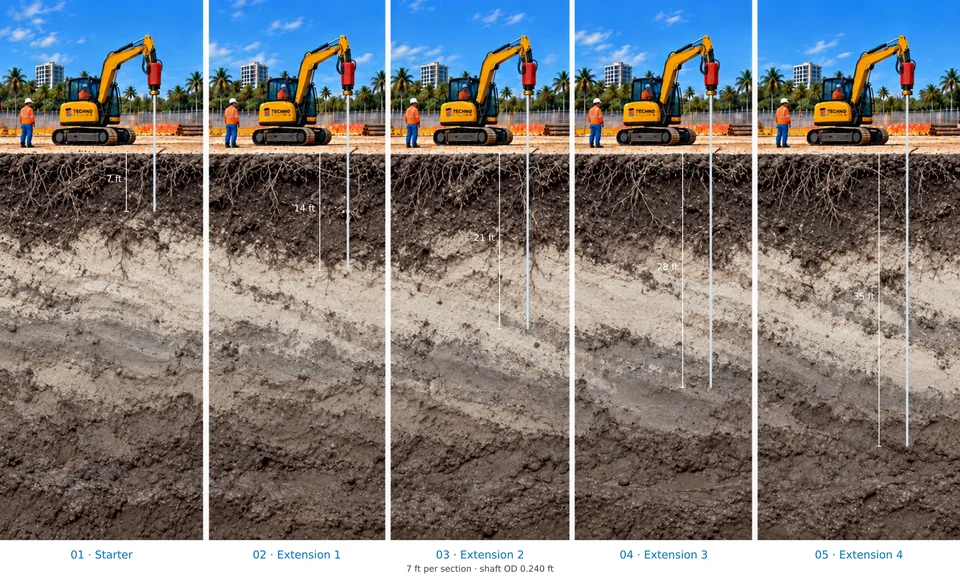
In this guide, pin piles are small-diameter steel pipe piles driven in connected sections. They provide a foundation option where a large rig, long one-piece pile or conventional excavation arrangement may be difficult to accommodate.
Terminology varies in the market. A driven steel pipe pile should not be confused with a drilled and grouted micropile, a ductile-iron proprietary system or a helical pile. Specify the actual material, section, connection and installation method when comparing proposals.
Applications and the importance of access
Pin piles may be considered for new support points, additions and engineered foundation repairs. Sectional installation can help where available headroom or working space is limited. Suitability still depends on the required loads, subsurface conditions, the supported structure and the installation criteria.
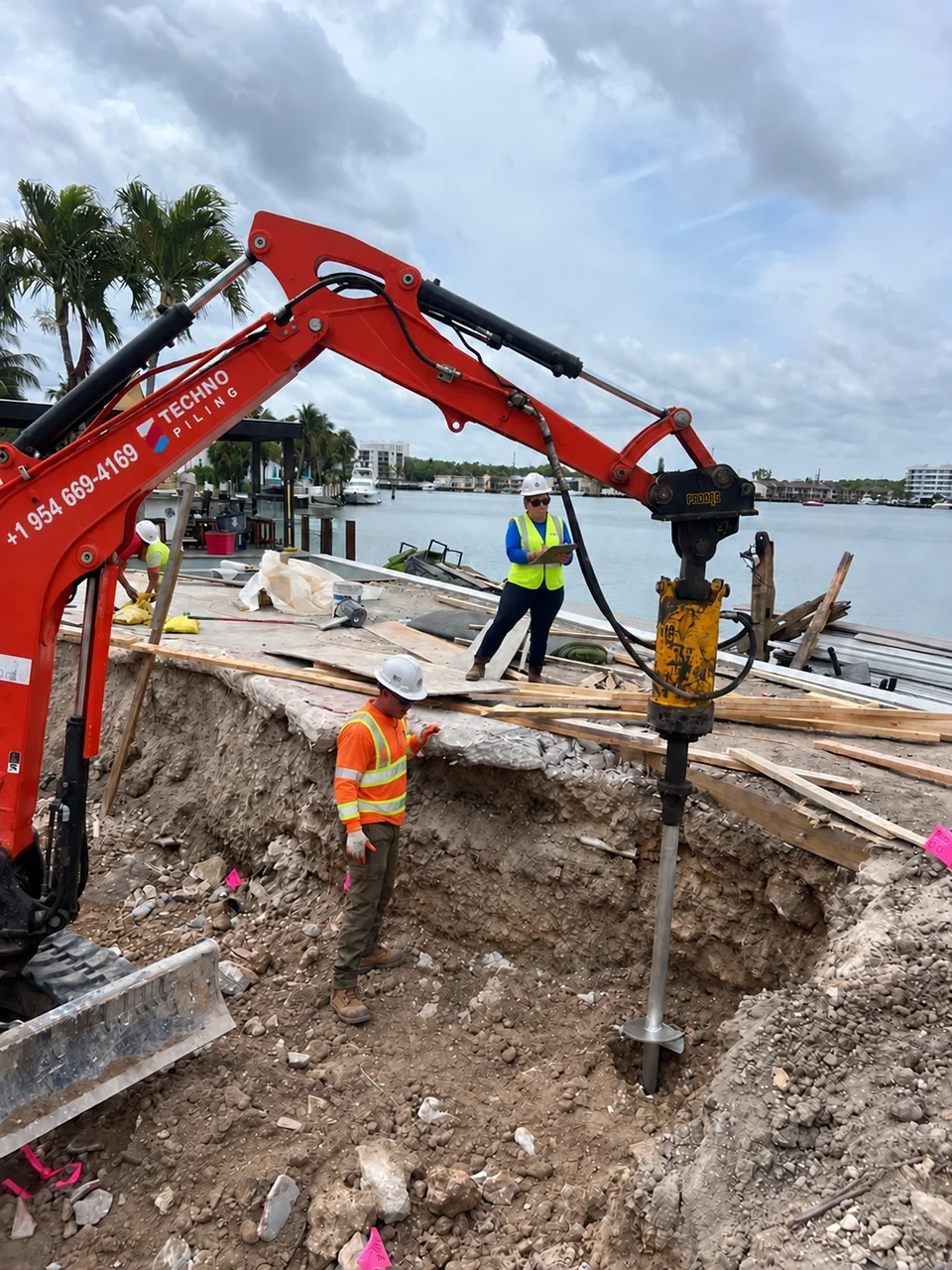
Provide more than a gate width. The installation team needs the route through the property, turning space, headroom, working surface, overhead services and the distance to each pile location. A compact machine also needs room to handle sections and operate safely.
Planning the complete system
- Define the pile layout, design actions and movement limits.
- Confirm pipe dimensions, material, corrosion provisions and connection details.
- Review the geotechnical information and possible obstructions.
- Select the driving equipment and project-specific termination criteria.
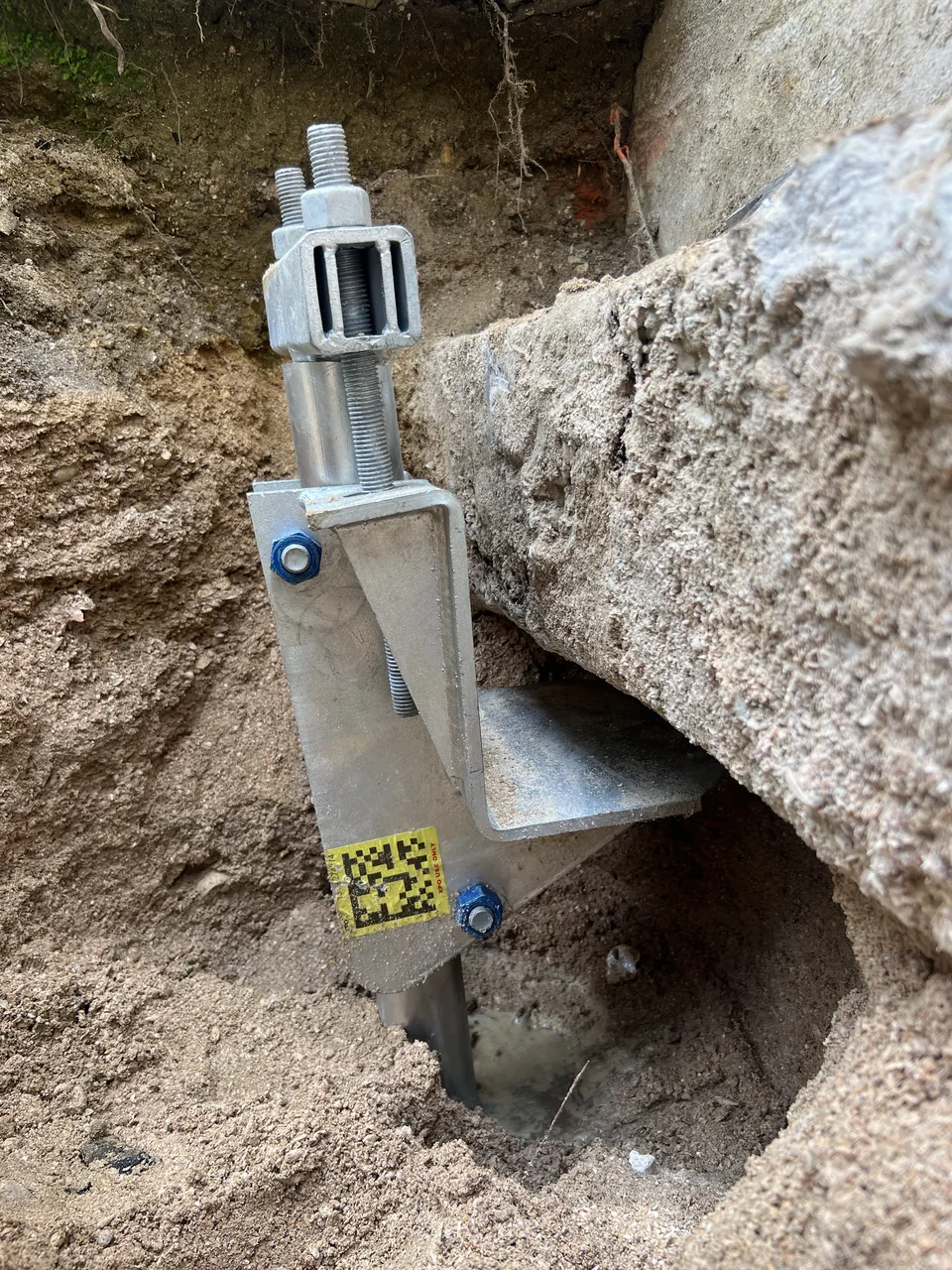
- Detail how the pile head transfers load to the footing, cap or other structure.
- Plan observations, monitoring and specified tests before mobilization.
Pipe length and diameter are not selected from a generic photograph. Shorter sections can help handling, but every connection becomes part of the structural and installation system.
Installation from setting out to the pile head
- Prepare the area. Verify utilities, the approved layout and a suitable working platform.
- Position the starter. Align the pipe and driving equipment with the intended pile axis.
- Drive the section. Observe penetration, alignment and the response of the ground and nearby structures.
- Connect the next section. Inspect and complete the specified connection before continuing.
- Apply the termination requirements. Review depth and driving observations against the project criteria. Escalate unexpected resistance or damage for review.
- Finish and verify. Establish the required cut-off level, head connection and testing or acceptance records.
Driving resistance is not the entire acceptance decision
Hard driving or a sudden reduction in penetration can have different causes. It does not by itself establish that the pile has reached the intended condition. The engineer interprets the installation observations with the ground information, pile system and specified acceptance method.
Testing should answer the project question. Where a load test is required, its arrangement, loading procedure, instrumentation and acceptance criteria must be established in advance. Keep each result traceable to the tested pile and its installation record.
Advantages and practical limitations
Sectional steel piles can simplify handling and create options for constrained work areas. Driving typically produces little drilling spoil. Potential limitations include noise and vibration, limited access for equipment or section handling, difficult penetration through obstructions, connection requirements and exposure of the shaft to conditions not assumed in the design.
Assess adjacent buildings, finishes and services before work. Keep pipes identifiable and supported during storage, inspect section ends and connections, and document damage. A proposed installation rate or final depth should follow the actual project conditions, not a universal production promise.
Records and information for a quote
A useful record includes pile ID and location, pipe sections and lengths, connection details, installed depth, driving system and observations, interruptions, final head level, testing and acceptance. For an estimate, send drawings, the ground report, the required number of piles, access photographs, measured clearances and target dates.
General technical guidance. Project drawings, geotechnical recommendations and approved system details govern the work.